


How Sign Maintenance Can Extend The Life Of Your Investment
Key Takeaways:
- Regular inspections and maintenance prevent minor issues from becoming costly repairs.
- Regular cleaning, electrical checks, and structural assessments help extend the life and ensure the safety of your signage.
- Proactive maintenance enhances brand image, projecting professionalism and reliability.
- Preventive care reduces the need for emergency repairs and operational disruptions, saving time and money.
- Implementing a consistent schedule and documenting work ensures long-term protection and efficiency.
Introduction
Quality signage represents a major investment for businesses looking to attract and retain customers. Yet even the best-designed and most durable signs are subject to environmental factors and everyday wear that can diminish their impact over time. Fading colors, malfunctioning lights, and structural issues can all turn a vibrant sign into an eyesore—or worse, a safety hazard. Fortunately, through regular maintenance and care, businesses can protect this valuable asset for years to come and build customer trust from the very first impression. Learn more about vinyl lettering Wayne, NJ to see how professional services can preserve your sign and ensure it remains a strong representation of your brand.
Skipping regular upkeep can dramatically shorten your sign’s lifespan, leading to untimely replacements and added expenses. Investing in scheduled maintenance not only saves money in the long run but also sends a clear signal to your customers that you value professionalism and attention to detail. A sign that looks neglected can quickly turn customers away, while a well-maintained sign invites trust and engagement.
The Importance Of Regular Sign Maintenance
The appearance of your sign is often the first impression a potential customer has of your business. When signs are overlooked, issues like peeling paint, cloudy acrylic, burned out bulbs or LEDs, and rusting hardware can appear—ultimately harming your image and sometimes even becoming code violations. These small problems, if ignored, can escalate into serious safety risks or necessitate costly repairs. Frequent inspections and maintenance visits can identify minor issues early, before they evolve into expensive emergencies.
According to Architectural Digest, even the highest quality materials will succumb to the effects of sun, wind, rain, and pollution. That’s why a proactive approach to sign maintenance is essential for both safety and aesthetics.
Key Components Of An Effective Maintenance Plan
Comprehensive maintenance should cover all aspects of your sign, focusing on both form and function:
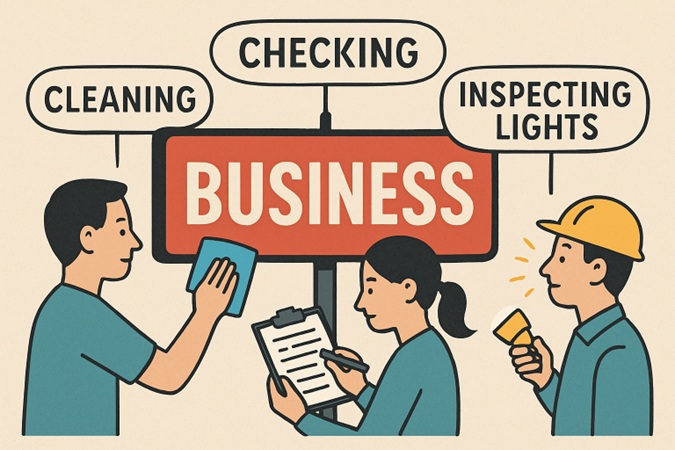
- Routine Inspections: Set regular intervals for visual and functional checks to spot stress points, loose hardware, and fading graphics.
- Cleaning: Clean the surface of signs frequently to remove grime, bird droppings, and pollutants that can degrade materials. Use gentle cleansers appropriate for your signage type.
- Electrical Checks: Inspect all internal wiring, lighting modules, and power supplies to ensure they are functioning properly. Good lighting is crucial for nighttime visibility and safety.
- Structural Assessments: Evaluate support poles, framing, and mounting hardware for signs of corrosion, cracks, or other weaknesses that could compromise stability.
Benefits Of Proactive Sign Maintenance
Proactive sign care offers a multitude of benefits that extend far beyond cosmetic improvements:
- Cost Savings: Addressing issues before they become severe helps avoid expensive emergency repairs and maximizes the ROI of your initial investment.
- Enhanced Brand Image: Consistently well-maintained signs reinforce your brand’s professionalism and commitment to quality, attracting more potential customers.
- Safety Assurance: Regular maintenance reduces the likelihood of accidents caused by falling hardware or electrical faults, keeping both employees and customers protected.
Maintenance is not simply an expense, but a valuable strategy for asset preservation and risk management. According to the Forbes Technology Council, organizations that prioritize preventive maintenance have fewer disruptions and see lasting returns on their infrastructure investments.
Case Study: The Impact Of Preventive Maintenance
A retail company with a statewide presence implemented a quarterly maintenance program for all standalone and building-mounted signage. Before maintenance, the company averaged three emergency repair calls per location annually, each costing thousands of dollars and causing signage outages for days at a time. After adopting the maintenance plan, emergency incidents decreased by more than 70%, with most issues resolved during scheduled visits—resulting in cost savings and reduced downtime.
This experience demonstrates how regular attention to minor repairs and cleaning can have a substantial impact on operational budgets, brand visibility, and customer experience.
Implementing A Maintenance Schedule
Step 1: Assess Your Signage
Begin by evaluating the condition and environment of all your signs. Take note of materials, installation date, and exposure to sun, weather, or pollutants, as each factor influences maintenance needs.
Step 2: Develop A Schedule
Create a maintenance timeline that accounts for the intensity and type of care required by each sign, customizing schedules for those in harsher environments or high-traffic areas.
Step 3: Assign Responsibilities
Designate maintenance tasks to employees with the necessary skills, or consider hiring professional sign maintenance services to ensure thoroughness and compliance.
Step 4: Document & Review
Keep detailed records of inspections, actions taken, and parts replaced. Review your process annually and update your maintenance plan as your signage or business needs evolve.
Final Thoughts
Proactive sign maintenance forms the cornerstone of a smart business strategy—one that saves money, eliminates hazards, and keeps your brand shining bright all year long. Through consistent inspections, cleanings, and repairs, you’ll safeguard your investment and create an inviting, trustworthy presence that encourages customer engagement.